Wedding Day Details That Make the Biggest Impact
Most couples pour their energy into the invitation, and rightfully so. It's the first impression guests get of your wedding. But the truth is, the invitation is just the opening line of a much longer story, and the rest of that story gets told in the small paper details scattered throughout the day itself.
The signs guests read as they walk in. The card that tells them where to sit. The little something they tuck into their bag on the way out. These details are what guests actually spend the day surrounded by, and when they carry the same look and feeling as your invitation, the whole event feels considered from start to finish.
Here's a closer look at the details worth prioritizing, and how to make each one count.
Ceremony Programs
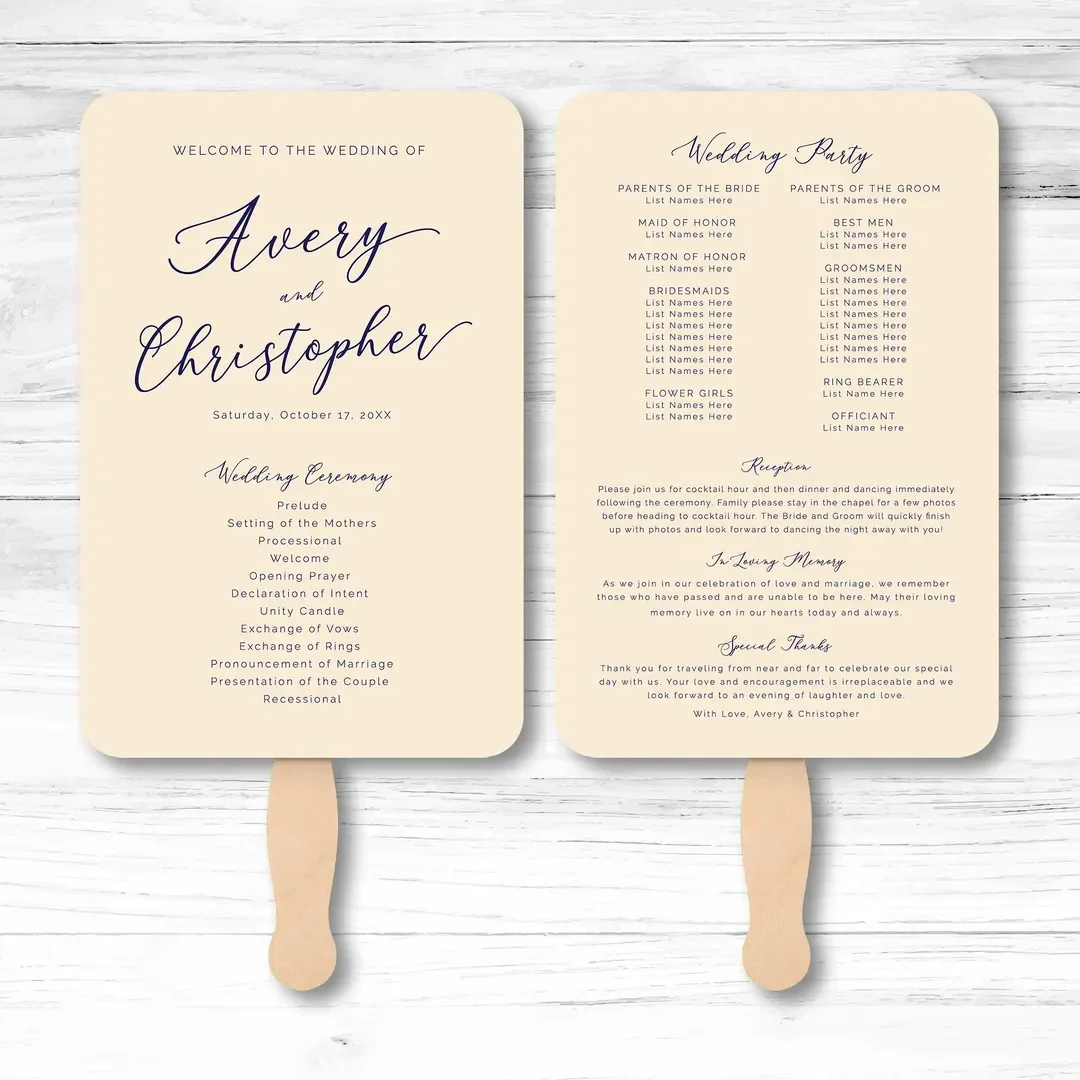
A ceremony program does more than list the order of events. It gives guests something to hold onto while they wait for you to walk down the aisle, and it's often the first printed piece they'll see up close on the actual day.
Beyond the order of events, programs are a great place to include the wedding party's names, a note about the significance of any rituals or readings, or even a short thank-you to your guests. Fan-style programs are especially popular for outdoor ceremonies, since they double as a way to stay cool. Whatever format you choose, keep the design consistent with your invitation suite so the day feels cohesive from the very first piece guests hold.
Signature Drink Signs
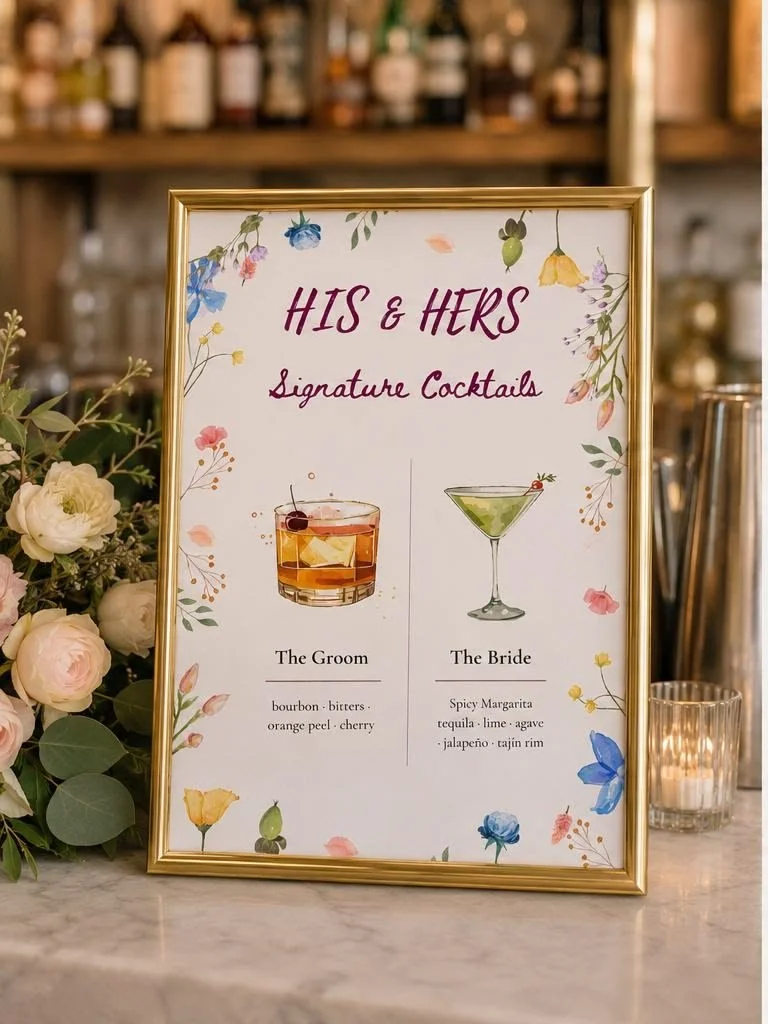
Signature drink signs have become one of the easiest ways to add personality to a reception. Naming a cocktail after an inside joke, a shared memory, or a nod to how you met turns a simple bar menu into a conversation starter.
Design-wise, these signs pair well with the same illustration style or color palette as your invitations, so they feel like part of the same story rather than a standalone prop. Keep the wording short and punchy too, so the name isn’t too complicated for guests to understand.
Welcome Signs
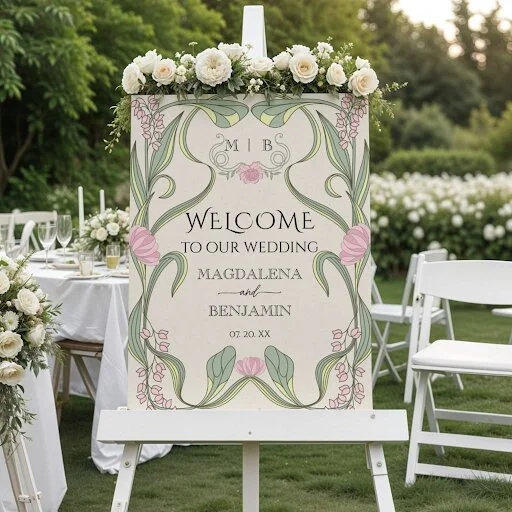
A welcome sign is one of the first things guests see when they arrive, which makes it a big opportunity to set the tone for the whole event. It typically includes your names, the wedding date, and a warm line welcoming guests to celebrate with you.
Large-format welcome signs work well at the entrance to the ceremony or reception space, while a smaller tabletop version can greet guests near the guest book or escort card display. Materials matter here too. Acrylic and wood both photograph beautifully, but a printed sign that matches your invitation design keeps the visual thread running through the entire day.
Escort Cards
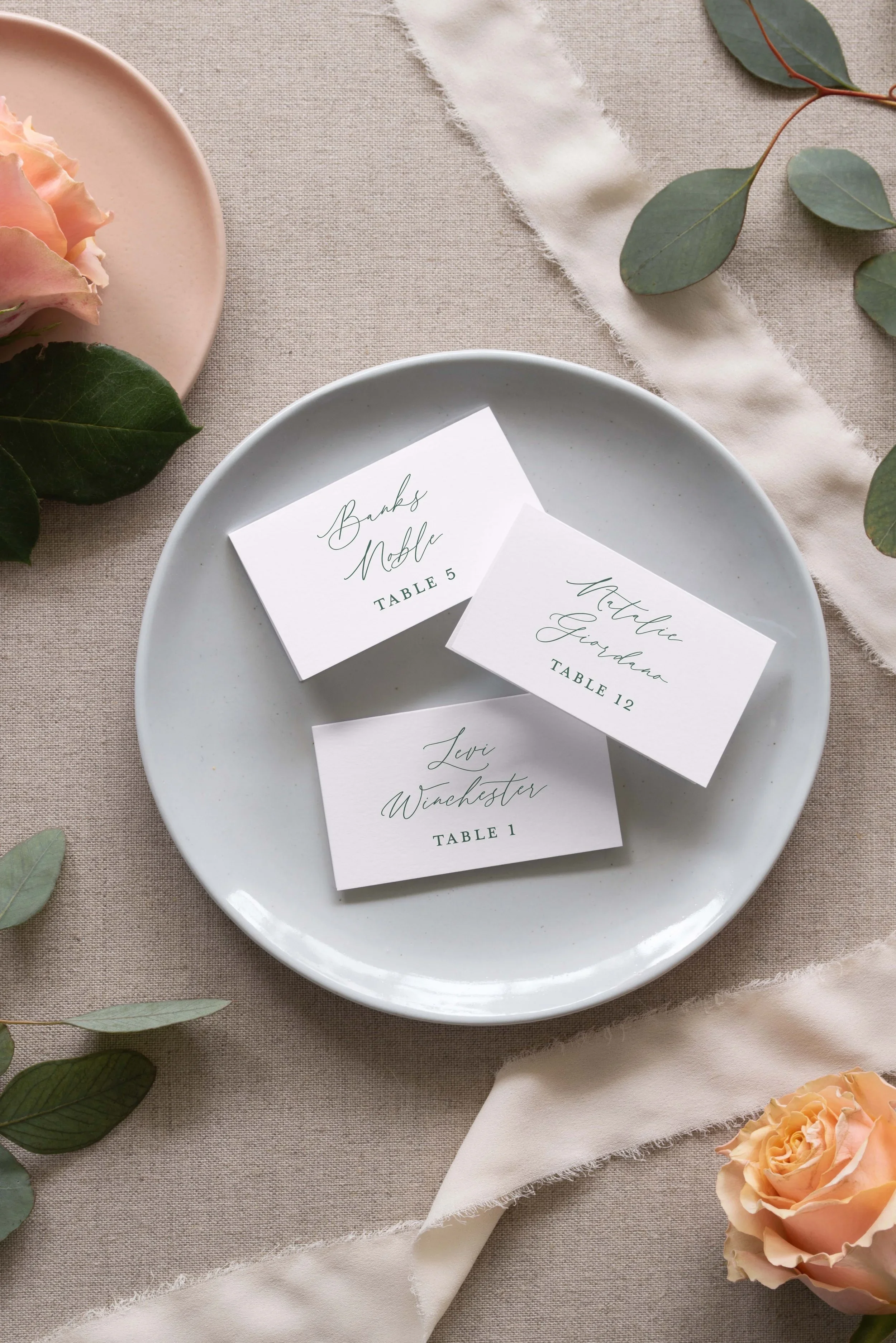
Escort cards solve a real logistical problem, getting guests to their tables, while giving you another chance to layer in design. Since every guest interacts with their card individually, this is one detail that gets a lot of up-close attention.
Couples are moving beyond the standard place card table toward more creative displays: cards tucked into greenery, hung from a wall, or arranged inside a vintage frame. Whatever display you choose, keep the typography legible from a few feet away. Guests are often scanning quickly to find their name, so this isn't the place for an overly ornate script that's hard to read at a glance.
Menu Cards
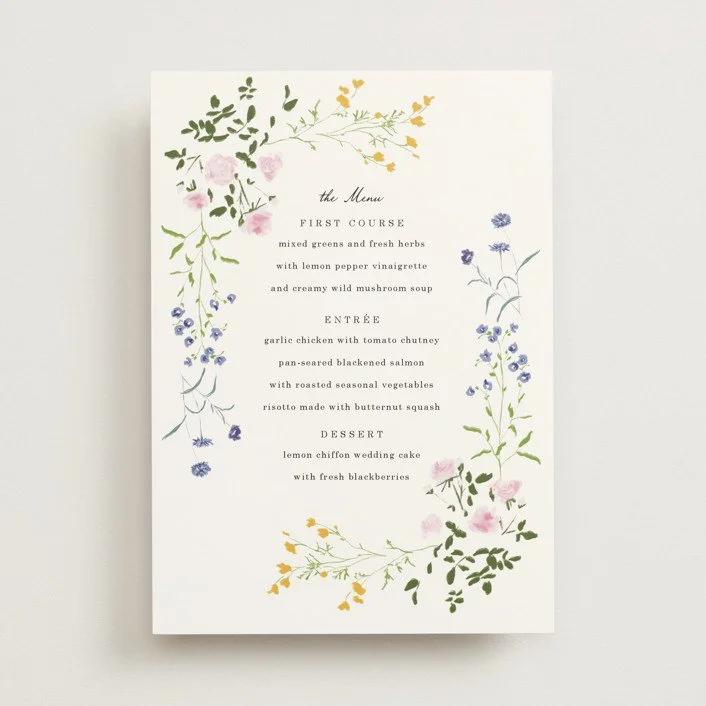
A printed menu card adds a layer of polish that guests notice even if they can't quite explain why. It also serves a practical purpose, letting guests with dietary restrictions or allergies know exactly what's coming.
Menu cards are usually placed at each table setting or folded into the napkin, and they're a natural extension of your invitation suite since they use the same color palette, paper stock, and typography. If your reception includes a plated dinner with courses, this is also a chance to add small descriptive details about each dish, which gives the meal a more elevated, restaurant-quality feel.
Personalized Napkins
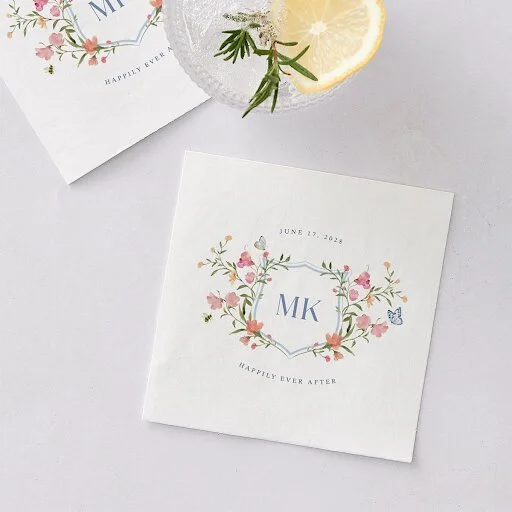
Personalized napkins are a small, affordable detail that shows up in nearly every reception photo, whether guests notice it consciously or not. Your names, wedding date, or a short monogram printed in foil or ink ties the tablescape together without much effort.
These work well as a stand-alone detail or layered with a monogram that also appears elsewhere in your suite, like on your welcome sign or menu cards. It's a small investment that adds a surprising amount of polish to every table.
Bringing It All Together
None of these details need to be complicated or expensive to make an impact. What matters most is that they feel connected, using the same colors, fonts, and motifs guests first saw on your invitation. That's what turns a wedding from a series of separate decisions into a day that feels fully designed.
At InvitesInk, we help couples extend their invitation suite across every detail of the day, from ceremony programs to menu cards. Let's build a cohesive design system that carries your story from the mailbox all the way to the reception table.
Browse our wedding day goods and let's design the details that'll make your guests remember the day.