
What Information Should Be Included on a Bar or Bat Mitzvah Invitation?
A bar or bat mitzvah invitation has more moving parts than most other event invitations. There's the ceremony, the reception, possibly a separate party, RSVP logistics, dress code, accommodations, and plenty of other features to consider including. Getting all of that onto one beautiful, readable invitation takes some planning.
This checklist covers everything your invitation needs to include, what's optional but worth considering, and a few practical tips to make the whole process smoother.
The Essentials: What Every Invitation Must Have
1. The Child's Name
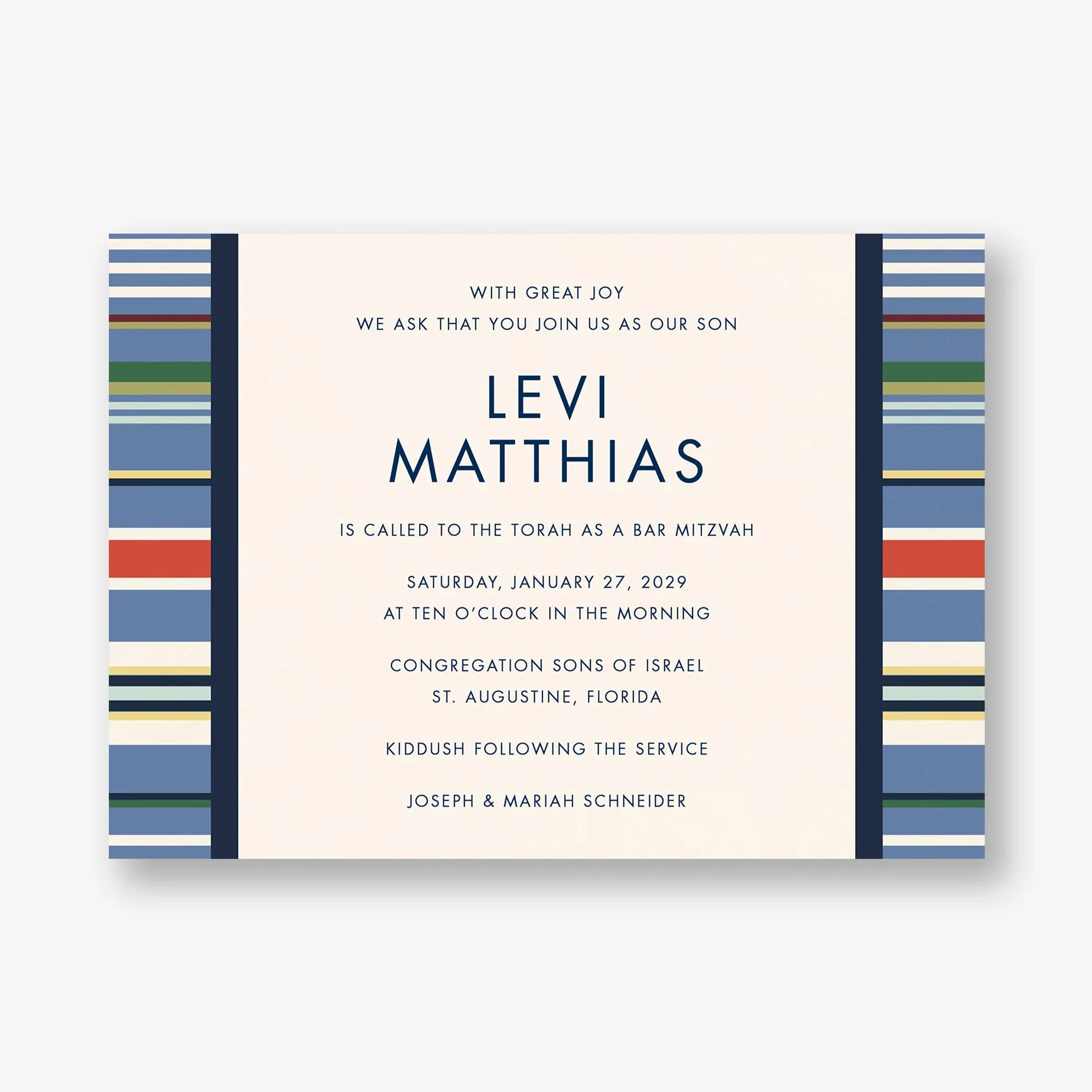
This is the star of the invitation, and the design should reflect that. The child's full name should appear prominently, typically in a larger or bolder font than the surrounding text, so it's the first thing guests see when they open the envelope.
2. The Child's Hebrew Name
Including your child's Hebrew name is a meaningful touch and a common tradition. It grounds the invitation in the religious significance of the day and adds a deeply personal element. It can appear in Hebrew lettering, transliteration, or both.
3. The Host Names
Bar and bat mitzvah invitations are traditionally issued by the parents. The hosts' names typically appear near the top of the invitation, either as a formal line ("Mr. and Mrs. David Cohen invite you to join them...") or in a warmer, more casual format ("With joy and pride, Sarah and David Cohen invite you..."). The level of formality should match the overall tone of the event and the invitation design.
4. Ceremony Details
Include the full details of the Torah service:
Day of the week and date (formal invitations spell out the date in full; casual ones can use numerals)
Time of the ceremony
Full name of the synagogue or venue
Complete street address, city, and state
If there are any helpful logistics for the ceremony, such as which entrance to use or where to park, consider adding those to a separate details card rather than crowding the main invitation.
5. Reception Details
If the reception follows immediately at the same location, a simple line like "Celebration to follow in the hall" is sufficient. If the party takes place at a separate venue or at a different time, include:
The venue name and full address
The start time of the reception
Any gap between the ceremony and party that guests should know about
If the after-party is only for a select group of guests (close family and friends, for example, while the ceremony itself is open to the whole congregation), you may want to print two versions of the invitation: one that includes the reception details and one that doesn't, to avoid confusion or hurt feelings.
6. RSVP Information
An RSVP deadline is essential. Your caterer, venue, and any entertainment vendors will need final numbers, so give yourself enough runway. A good rule of thumb is to set the RSVP deadline three to four weeks before the event. Options for how to collect RSVPs include:
A printed RSVP card with a return envelope (the most traditional approach)
A QR code or link to your family's wedding or event website
A phone number or email address
Strongly Recommended: Details That Prevent Confusion
7. Dress Code
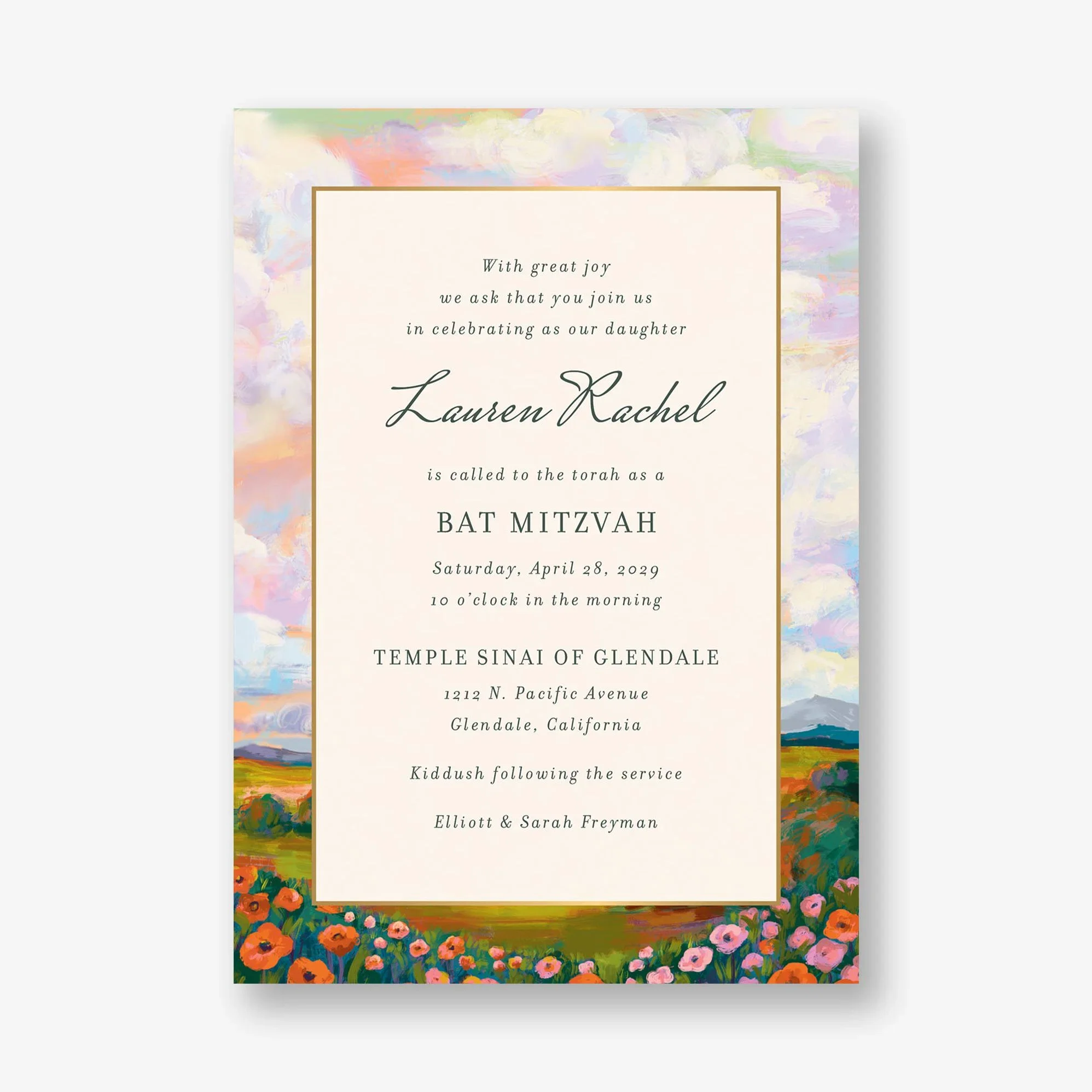
Whether the event is black tie, cocktail attire, or business casual, include the dress code on the invitation. This is especially important for non-Jewish guests who may not know what to expect, and for guests coming from out of town who need to pack accordingly. The dress code can appear as a small line at the bottom of the main invitation or on a separate details card.
8. Parking and Logistics
For venues where parking is not immediately obvious, or for guests unfamiliar with the area, a note about parking, valet, or transportation options is genuinely helpful. This information is best placed on a separate details card rather than the main invitation.
Optional but Worth Considering
9. The Torah Portion
Some families choose to include the name of the child's Torah portion on the invitation. It's a meaningful detail that connects the celebration to its religious foundation and gives guests a sense of the specific moment in the child's spiritual journey.
10. Weekend Schedule
If you're hosting multiple events over a mitzvah weekend (a Friday night Shabbat dinner, the Saturday morning service and reception, a Sunday brunch), a small weekend itinerary card is an invaluable addition to the suite. Guests, especially those traveling from out of town, will appreciate having everything laid out clearly so they can plan accordingly.
11. Accommodations
If you've reserved a hotel room block for out-of-town guests, include a separate accommodations card with the hotel name, address, and the room block code or deadline for booking. This detail is easy to overlook and can cause real stress for guests if they find out about the block too late to use it.
12. Gift Registry or Charity Information
Some families choose to include information about a gift registry or a charity in lieu of gifts. Etiquette varies on this point. If you include it, a separate enclosure card is the right place for it, not the main invitation itself.
13. Website or QR Code
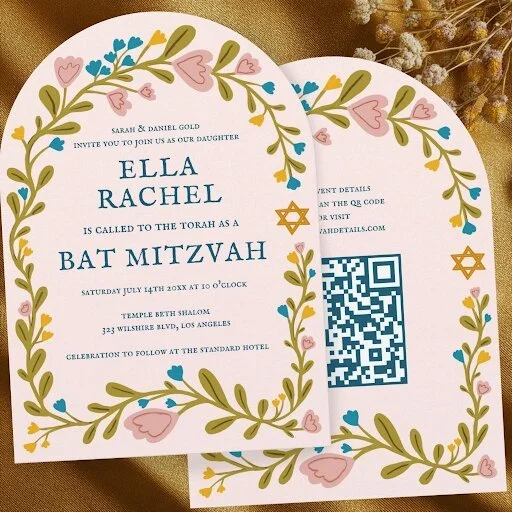
A family event website is a great place to house all the details that won't fit on the invitation: the full weekend schedule, travel tips, local restaurant recommendations, photo galleries from the child's preparation, and RSVP management. Including a short URL or QR code on the details card (not the main invitation) directs guests there without cluttering the design.
A Note on Formality and Wording Tone
The wording of a bar or bat mitzvah invitation can range from very formal ("Mr. and Mrs. Jonathan Levy request the honor of your presence...") to warm and personal ("With pride and joy, we invite you to celebrate with us as our daughter...") to something the child themselves might voice ("Please join me as I become a bat mitzvah..."). None of these is more correct than the others. What matters is that the tone matches the event and feels authentic to your family.
One consistent rule regardless of formality level: spell out all location details fully and accurately. Misspelled synagogue names or incorrect addresses are the most common and most frustrating invitation errors, and they're easy to avoid with one careful proof before printing.
Quick Reference Checklist
Here's everything in one place:
Must-haves:
Child's full name (prominently displayed)
Child's Hebrew name
Host (parent) names
Ceremony date, time, synagogue name, and full address
Reception date, time, venue name, and full address
RSVP deadline and instructions
Strongly recommended:
Dress code
Parking and logistics information
Optional:
Torah portion name
Weekend itinerary card
Accommodations card
Gift registry or charity information
Event website URL or QR code
At InvitesInk, we design bar and bat mitzvah invitation suites built around everything on this list, from the child's name and ceremony details down to the dress code, the Torah portion, and every optional card that makes your guests' experience smoother, all woven into one cohesive, beautifully designed suite. If you're not sure which pieces you need or how to fit it all together, we're happy to help you figure it out.
Reach out to start designing your suite, and let's make sure your guests have everything they need to celebrate your child's big day.